
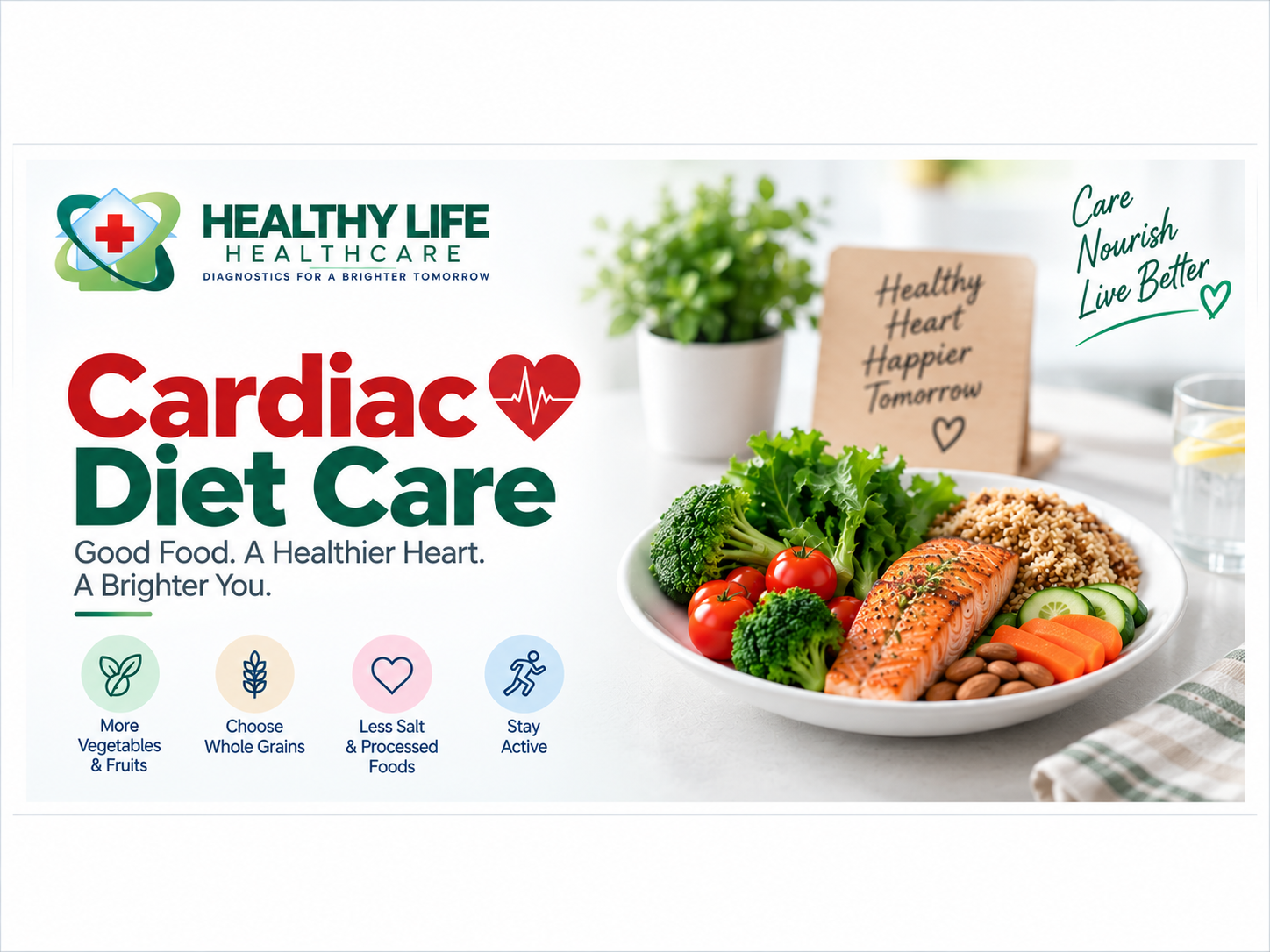
Cardiac Diet Care: A Guide to Eating Better for a Healthier Heart
The heart works quietly every moment of our lives.
From the first beat in the morning to the last beat at night, it keeps blood moving through the body, supporting our brain, muscles and every organ. Yet, in our busy Indian lifestyle, the heart can sometimes receive less attention than it deserves.
Long working hours, restaurant meals, fried snacks, sweets, sugary drinks, excess salt, irregular eating patterns and limited physical activity can gradually influence overall cardiovascular health. WHO identifies unhealthy diet, physical inactivity, tobacco use and harmful alcohol use among the important behavioural risk factors for cardiovascular disease.
This is where cardiac diet care becomes important.
A heart-friendly diet is not about eating tasteless food or giving up everything you enjoy. It is about understanding your food choices and finding a practical balance that fits your health needs, culture, lifestyle and everyday Indian meals.
For people looking for cardiac diet care in Kolkata, the goal should be simple: make healthier choices that can realistically become part of everyday life.
What Is Cardiac Diet Care?
Cardiac diet care refers to nutrition planning focused on supporting cardiovascular health.
It may be particularly relevant for people who have been advised to manage risk factors such as high blood pressure, high cholesterol, diabetes, overweight or obesity, or for those recovering from or living with certain cardiovascular conditions.
However, there is no single "heart diet" that is suitable for everyone.
A person's age, medical history, medications, kidney function, blood pressure, blood glucose, cholesterol levels, physical activity and existing heart condition can all influence nutritional recommendations.
That is why a personalized cardiac diet plan should ideally be developed with appropriate professional guidance.
The American Heart Association's updated 2026 dietary guidance emphasizes an overall eating pattern built around vegetables and fruits, whole grains, healthy protein sources, unsaturated fats, minimally processed foods and reduced sodium and added sugar.
Why Does Diet Matter for Heart Health?
Food is more than something that fills the stomach.
Over time, dietary habits can influence body weight, blood pressure, blood glucose and blood lipid levels, all of which are relevant to cardiovascular health. WHO notes that unhealthy dietary patterns can contribute to cardiovascular disease and other noncommunicable diseases.
This does not mean that one particular food causes heart disease or that one food can prevent it.
Heart health is influenced by many factors.
Genetics, age, physical activity, tobacco exposure, medical conditions, stress, sleep and access to healthcare can all matter.
A heart-healthy diet in India should therefore be viewed as one part of a broader approach to cardiovascular wellbeing.
What Does a Heart-Healthy Indian Diet Look Like?
One of the biggest misconceptions is that heart-friendly food must be completely different from traditional Indian food.
It does not.
Indian kitchens already contain many nutritious ingredients that can fit into a balanced dietary pattern.
Whole Grains
Depending on individual nutritional needs, foods such as oats, whole-wheat roti, brown rice, millets and other whole-grain choices can provide dietary fibre and nutrients.
The important principle is to choose more minimally processed whole-grain foods where appropriate rather than relying heavily on refined grains.
Vegetables
Vegetables can be an important part of everyday meals.
Seasonal vegetables such as spinach, beans, gourds, carrots, cauliflower, tomatoes, pumpkin, cabbage and other locally available options can add fibre, vitamins and minerals.
WHO recommends a diversified diet containing vegetables, fruits, legumes and other nutritious foods.
Fruits
Fresh fruit can be a practical alternative to many highly processed sweet snacks.
Guava, apple, orange, papaya, watermelon and other seasonal fruits can be incorporated according to an individual's overall diet and medical requirements.
WHO notes that fruits and vegetables provide important nutrients and dietary fibre and are associated with cardiovascular health when consumed as part of an overall healthy dietary pattern.
Pulses and Legumes
Dal, chickpeas, rajma, beans and other legumes can provide plant-based protein and fibre.
For many Indian families, these foods are already part of traditional meals, making them practical components of a heart-conscious eating pattern.
Healthy Sources of Fat
The type and quantity of fat matter.
Replacing some sources of saturated fat with unsaturated fat is part of current heart-healthy dietary guidance.
This does not mean that cooking oil needs to disappear from the kitchen. Rather, the overall amount, type of oil, cooking method and total dietary pattern should be considered.
Why Is Salt Important in Cardiac Diet Care?
Salt is one of the most important areas to consider when discussing a cardiac diet plan.
Many Indian meals contain salt from several sources: cooking salt, pickles, papad, packaged snacks, sauces, instant foods and restaurant meals.
WHO recommends limiting adult salt intake to less than 5 grams per day, equivalent to less than 2 grams of sodium per day.
Reducing excessive salt intake can be particularly important for people who need to manage blood pressure.
Instead of suddenly making every meal bland, families can gradually reduce added salt and explore natural flavours using herbs, spices, lemon, ginger, garlic and other ingredients, depending on individual medical and dietary requirements.
What About Fried Foods and Sweets?
Indian food culture is wonderfully diverse, but celebrations and everyday eating can sometimes involve foods high in saturated fat, added sugar and calories.
Samosas, kachoris, pakoras, fried snacks, sweets, cakes, biscuits and sugary beverages do not necessarily need to become a source of guilt.
The focus should be on frequency, quantity and overall dietary pattern.
Current AHA guidance recommends minimizing added sugars, choosing minimally processed foods and replacing sources of saturated fat with healthier unsaturated fat sources.
For someone following a medically prescribed cardiac diet, however, individual recommendations may be more specific.
Cardiac Diet Care After a Heart Problem
People living with cardiovascular conditions may understandably become anxious about food.
After a heart-related diagnosis or procedure, families often ask:
"What can I eat now?"
The answer depends on the individual.
Someone with heart disease may have different nutritional requirements from someone who simply wants to improve general cardiovascular health. People with diabetes, kidney disease, high blood pressure or other conditions may need additional dietary considerations.
Therefore, online diet charts should not replace individualized medical advice.
A qualified healthcare professional can help determine what changes are appropriate based on the person's health profile.
Cardiac Diet Care in Kolkata
Kolkata has a rich food culture. From rice and dal to fish, vegetables, sweets and snacks, food is deeply connected with family, festivals and social life.
A successful cardiac diet in Kolkata should therefore be realistic.
It should help a person make healthier choices without unnecessarily disconnecting them from their cultural food habits.
For example, rather than simply saying "stop eating Bengali food," a practical approach may involve looking at:
- Portion sizes
- Cooking methods
- Frequency of fried foods
- Salt consumption
- Type and quantity of cooking oil
- Vegetable intake
- Whole-grain choices
- Protein sources
- Sugary foods and beverages
- Meal timing
- Individual medical requirements
This is what makes personalized cardiac nutrition more meaningful than a generic diet chart.
Small Changes Can Become Everyday Habits
A heart-friendly lifestyle does not have to begin with ten major changes on the same day.
Start with something manageable.
Use less salt.
Add more vegetables.
Choose fruit instead of a highly processed sweet snack more often.
Reduce deep-fried foods.
Choose whole or minimally processed foods more frequently.
Pay attention to portion sizes.
Stay physically active according to your doctor's advice.
If you smoke, seek professional help to quit.
These individual actions can become part of a larger lifestyle approach. WHO specifically identifies reducing salt, eating more fruits and vegetables, being physically active and stopping tobacco use among measures that can help reduce cardiovascular risk.
Healthy Life Healthcare: Supporting Better Health Choices in Kolkata
For people searching for cardiac diet care in Kolkata, heart-healthy diet guidance in Kolkata, cardiac nutrition care near Lake Town or related healthcare services, HEALTHY LIFE HEALTHCARE is located in Lake Town, Kolkata.
Address: P-354, Lake Town Road, near Hanuman Mandir, Block A, Lake Town, Kolkata, West Bengal 700089.
The important thing to remember is that nutrition is personal.
A diet that works well for one person may not be appropriate for another, particularly when cardiovascular disease, diabetes, kidney problems or medication use is involved.
Professional assessment can help ensure that dietary changes are sensible and appropriate for the individual's health situation.
A Healthier Heart Begins With Everyday Choices
Cardiac diet care is not about punishment.
It is not about being afraid of food.
And it certainly does not mean that enjoying meals has to disappear from your life.
It is about learning to make better choices more often.
For an Indian family, that might mean a plate with more vegetables, a sensible portion of whole grains, appropriate protein, less excessive salt and fewer highly processed foods.
It may mean changing the way a favourite meal is prepared rather than eliminating it completely.
Most importantly, cardiac nutrition should be personalized.
If you have heart disease, high blood pressure, high cholesterol, diabetes, kidney disease or have recently undergone a cardiac procedure, discuss dietary changes with your doctor or an appropriately qualified nutrition professional before making major changes.
Your heart works for you every day.
Taking care of it can begin with something as ordinary as what you put on your plate.
Back to Blogs