
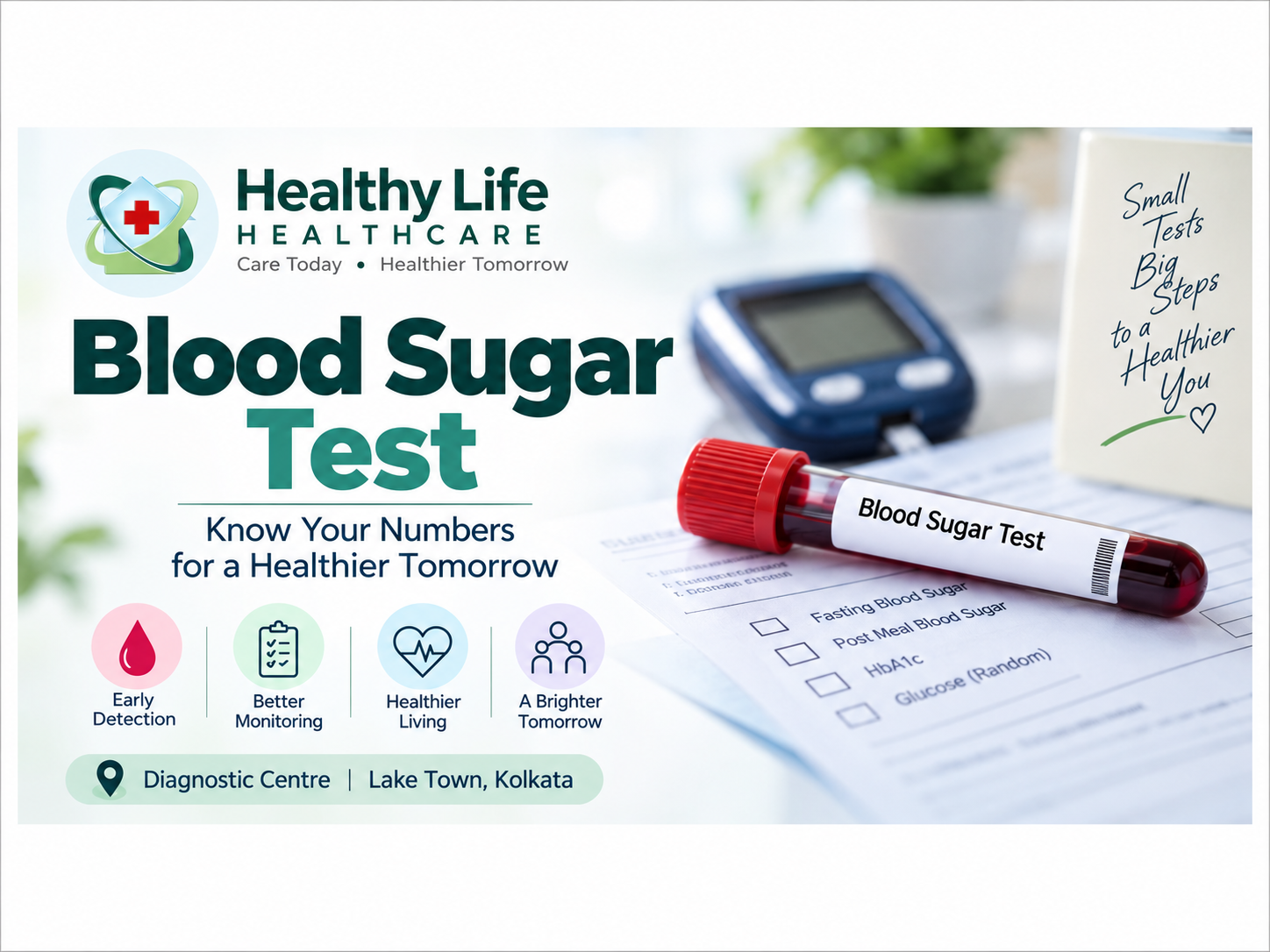
What Is a Blood Sugar Test?
A blood sugar test measures the amount of glucose present in your blood at a particular time. Glucose is an important source of energy for the body, and insulin helps regulate how glucose moves from the bloodstream into cells.
Blood glucose can change throughout the day depending on meals, physical activity, stress, illness, medicines and other factors. For this reason, doctors may use different types of blood glucose tests depending on what they are evaluating.
A blood sugar test is commonly performed as part of routine health assessments, diabetes screening, or monitoring for people who have already been advised to check their glucose levels.
At a diagnostic centre in Kolkata, the appropriate test and preparation can be explained before sample collection.
Why Might a Doctor Recommend a Blood Sugar Test?
Doctors may recommend blood glucose testing for several reasons.
It may be used to:
- Screen for diabetes or prediabetes
- Monitor blood glucose in people with diabetes
- Assess glucose levels when certain symptoms are present
- Check metabolic health during a routine health checkup
- Monitor glucose during pregnancy when clinically appropriate
- Evaluate blood glucose when certain medicines or medical conditions may affect it
A blood sugar result is only one part of a person's overall health assessment. Depending on the situation, a doctor may recommend additional tests such as HbA1c or other investigations.
What Does the Test Measure?
The test measures glucose concentration in the blood.
Several forms of glucose testing are commonly used:
Fasting Blood Sugar
This test measures blood glucose after fasting for a specified period, commonly overnight. The exact fasting instructions should come from the laboratory or healthcare professional.
Random Blood Sugar
A random blood sugar test can be performed at any time and does not necessarily require fasting.
Post-Meal Blood Sugar
This test measures glucose after eating, according to the timing specified by the healthcare professional.
HbA1c
HbA1c is different from a single blood sugar measurement. It provides an estimate of average blood glucose levels over approximately the previous two to three months.
The doctor decides which test or combination of tests is appropriate based on the individual's circumstances.
Who May Need a Blood Sugar Test?
Blood glucose testing may be appropriate for people with risk factors for diabetes or those who need monitoring of an existing condition.
A doctor may consider testing when someone has:
- A family history of diabetes
- Overweight or obesity
- High blood pressure
- Abnormal cholesterol or triglyceride levels
- A history of elevated blood glucose
- Certain pregnancy-related risk factors
- Symptoms that require medical evaluation
- A known diagnosis of diabetes
Routine health checkups may also include glucose testing depending on age, medical history and individual risk factors.
Having a risk factor does not mean that a person has diabetes. Testing is required to assess glucose levels appropriately.
How Should You Prepare for a Blood Sugar Test?
Preparation depends on the type of test.
For a fasting blood sugar test, the laboratory or doctor may ask you to avoid food for a specified period before the sample is collected. Water may generally be permitted, but specific instructions should be followed.
For random blood sugar testing, fasting is usually not required.
If you take regular medicines, do not stop or change them on your own just because you are having a blood test. Ask your doctor or laboratory about any specific instructions.
It is also useful to tell the healthcare professional if you are pregnant, taking medicines that may affect glucose levels, or have recently been unwell.
What Happens During the Test?
Blood sugar testing is usually a straightforward blood collection procedure.
A healthcare professional cleans the skin and collects a small blood sample, usually from a vein in the arm. The sample is then sent to the laboratory for analysis.
Some glucose tests can also be performed using a finger-prick sample, depending on the purpose and testing method.
You may experience brief discomfort during blood collection. Most people can return to their normal activities afterward unless their healthcare professional advises otherwise.
Understanding Blood Sugar Test Results
Blood glucose results should be interpreted according to the type of test, timing of the sample, laboratory reference ranges and the individual's medical circumstances.
A single abnormal result does not necessarily provide a complete picture of someone's health. Factors such as recent food intake, illness, stress, physical activity and certain medicines can influence blood glucose.
For this reason, doctors may recommend repeat testing or additional investigations when appropriate.
Do not diagnose yourself from a laboratory report. If your blood sugar result is higher or lower than the stated reference range, discuss it with a qualified healthcare professional.
When Should You Discuss Your Results With a Doctor?
You should speak with your doctor if your report shows an abnormal result, particularly if you have diabetes risk factors or symptoms that concern you.
People already diagnosed with diabetes should follow the monitoring schedule recommended by their healthcare professional.
If you experience symptoms such as severe weakness, confusion, fainting, excessive thirst with frequent urination, or other significant symptoms, seek appropriate medical care rather than relying only on a laboratory test.
Common Misconceptions About Blood Sugar Testing
"A normal blood sugar test means I can never develop diabetes."
Not necessarily. Blood glucose can change over time, and future risk depends on several factors.
"You always need to fast for a blood sugar test."
Not every glucose test requires fasting. The preparation depends on the specific test requested.
"One high reading confirms diabetes."
A single result may not be enough to establish a diagnosis. Doctors consider the test type, clinical situation and, when necessary, additional or repeat testing.
"Blood sugar and HbA1c are exactly the same test."
They are different. Blood sugar reflects glucose at the time of testing, while HbA1c provides information about average blood glucose over a longer period.
Frequently Asked Questions
1. Is fasting required for a blood sugar test?
It depends on the test. Fasting is commonly required for a fasting blood glucose test but is not necessarily required for random glucose testing.
2. Can I drink water before a fasting blood sugar test?
Follow the instructions provided by your doctor or laboratory. Plain water is generally permitted during fasting, but specific test instructions should take priority.
3. How often should I check my blood sugar?
There is no single schedule for everyone. Testing frequency depends on your health status, diabetes treatment and doctor's advice.
4. Is blood sugar testing useful during a health checkup?
Yes. Glucose testing may be included in a health checkup when appropriate based on age, risk factors and medical history.
5. What is the difference between blood sugar and HbA1c?
Blood sugar measures glucose at a particular time, while HbA1c reflects average blood glucose over roughly the preceding two to three months.
6. Can stress affect blood sugar?
Stress and acute illness can influence blood glucose levels. Your doctor can consider these factors when interpreting your results.
7. Where can I get a blood test in Lake Town, Kolkata?
Blood tests can be performed at Healthy Life Healthcare, located in Block A, Lake Town, Kolkata. Contact the centre for information about available tests and sample collection options.
Conclusion
A blood sugar test is a useful part of diabetes screening and glucose monitoring when used appropriately. Understanding whether your test requires fasting, what the result represents and how it should be interpreted can help you make better-informed healthcare decisions.
Remember that laboratory results should be considered alongside your symptoms, medical history and other clinical information. If a result is outside the laboratory's reference range or you have concerns about your blood glucose, discuss it with a qualified healthcare professional.
Get Your Blood Test at Healthy Life Healthcare
Healthy Life Healthcare is a diagnostic and healthcare centre serving patients in Lake Town, Kolkata.
Address: P-912, P-354, Near Hanuman Mandir, Block A, Lake Town, Kolkata, West Bengal 700089
Phone: 085829 14753
Website: Healthy Life Healthcare
For information about blood sugar testing, diagnostic tests and health checkups, contact Healthy Life Healthcare and ask about the appropriate test for your needs.
Back to Blogs