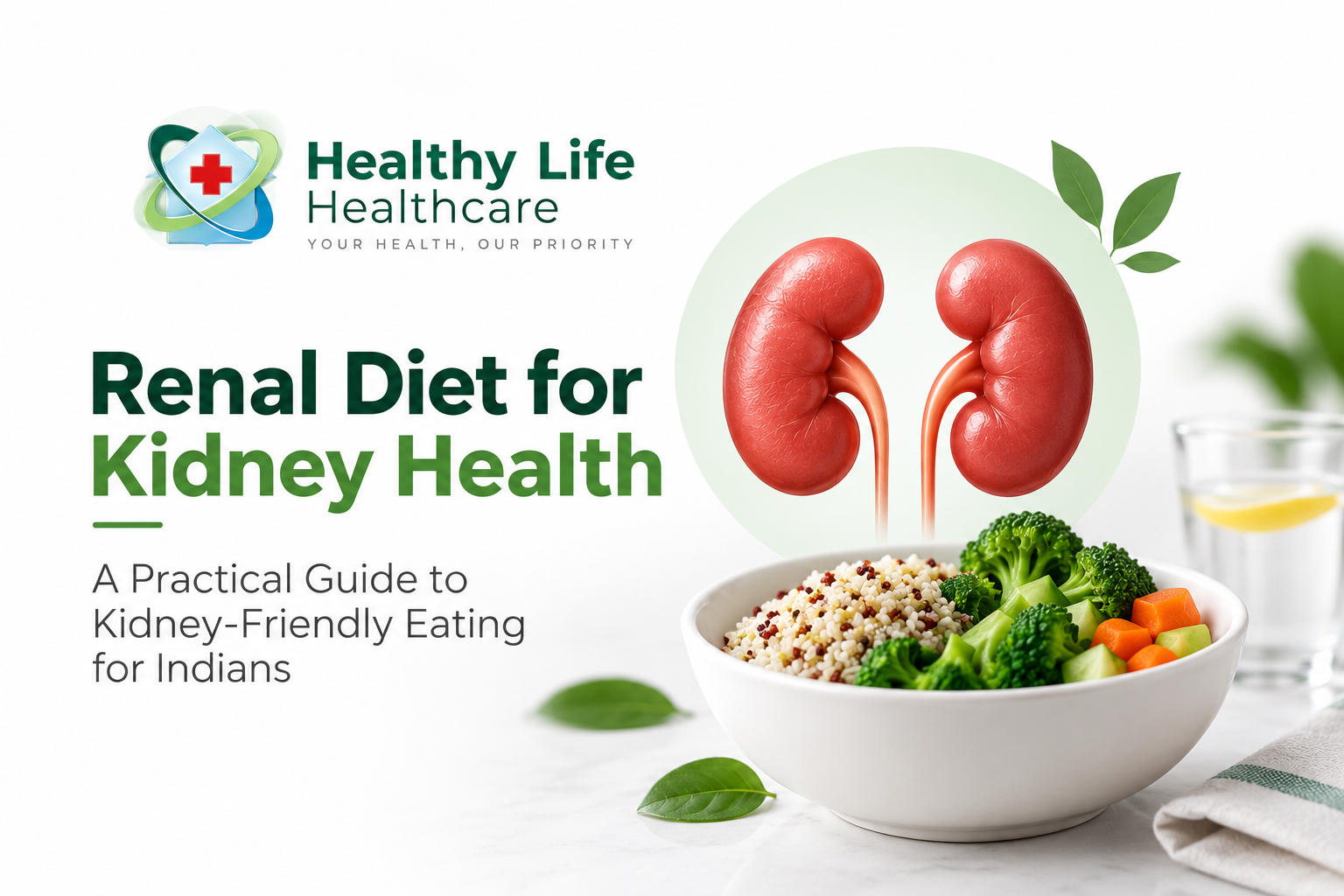
Renal Diet: A Practical Guide to Kidney-Friendly Eating for Indians
Kidneys work quietly every day to filter waste from the blood, balance fluids, regulate minerals, and support several important functions in the body. When kidney function is affected, everyday food choices can become an important part of maintaining overall health. This is where a renal diet can play a meaningful role.
For people living with kidney disease, or those who have been advised to take care of their kidney health, understanding what to eat and what to limit can make daily life easier. A renal diet is not simply about avoiding certain foods. It is about choosing the right balance of nutrients according to an individual's kidney function, laboratory results, medications, age, and other health conditions.
At Healthy Life Healthcare in Kolkata, nutritional and diagnostic awareness can help people understand their health better and take informed steps under appropriate medical guidance.
What Is a Renal Diet?
A renal diet, also called a kidney-friendly diet, is a dietary approach designed to reduce the nutritional burden on the kidneys and help manage certain complications associated with impaired kidney function.
Depending on the individual's condition, a renal diet may involve managing nutrients such as:
-
Sodium
-
Potassium
-
Phosphorus
-
Protein
-
Fluids
However, there is no single renal diet that works for everyone. Someone with early-stage kidney disease may have different dietary requirements from a person receiving dialysis.
For this reason, people should avoid making major dietary restrictions without consulting a qualified doctor or renal dietitian.
Why Is a Renal Diet Important?
Kidneys help remove excess substances and maintain the body's internal balance. When kidney function decreases, certain minerals, fluids, and waste products may accumulate.
A carefully planned kidney diet can help manage dietary intake according to individual medical requirements.
One of the most important principles is controlling sodium intake. Excess sodium can contribute to fluid retention and may increase blood pressure. Reducing highly salted foods, packaged snacks, pickles, instant foods, and processed meals may therefore be recommended for some individuals.
Similarly, potassium and phosphorus may need to be monitored when kidney function is significantly reduced.
Renal Diet and Indian Food Habits
Indian cuisine is diverse, nutritious, and deeply connected with family and culture. However, people managing kidney conditions may need to modify some traditional eating patterns.
Common foods such as dal, vegetables, dairy products, pickles, papad, processed snacks, sweets, and packaged foods can contain varying amounts of protein, potassium, phosphorus, sodium, or other nutrients.
This does not automatically mean that these foods must be completely eliminated.
Instead, the appropriate portion, preparation method, frequency, and overall dietary balance should be considered.
For example, home-cooked food may make it easier to control salt and processed ingredients compared with packaged meals. Using fresh ingredients and avoiding excessive salt can be useful components of a kidney-conscious lifestyle.
Potential Advantages of a Kidney-Friendly Diet
A properly planned renal diet can provide several potential benefits when it is appropriate for the individual's medical condition.
1. Better Sodium Management
Reducing excessive sodium may help with blood pressure and fluid management in people who have been advised to restrict sodium.
2. Supporting Fluid Balance
Some people with advanced kidney disease may need to monitor fluid intake. Dietary planning can help them understand how beverages and foods containing significant amounts of water fit into their daily fluid allowance.
3. Managing Potassium
High potassium levels can become a concern for some people with reduced kidney function. Depending on blood test results, healthcare professionals may recommend adjusting the quantity or type of potassium-rich foods.
4. Managing Phosphorus
Phosphorus levels can become difficult to regulate in chronic kidney disease. Dietary guidance may involve limiting particular high-phosphorus foods or choosing alternatives.
5. Appropriate Protein Intake
Protein requirements vary considerably. Some people may need to moderate protein intake, while people receiving dialysis may have higher protein requirements.
Therefore, simply following a generic "low-protein diet" can be inappropriate and potentially harmful for some patients.
What Foods May Need Attention?
A kidney-friendly eating plan is highly individual. Nevertheless, people may be advised to pay particular attention to:
High-sodium foods: packaged snacks, instant noodles, processed foods, salty biscuits, pickles, papad, and heavily salted meals.
Processed foods: ready-to-eat meals, processed meats, packaged sauces, and foods containing significant amounts of sodium or phosphorus additives.
Potassium-rich foods: certain fruits, vegetables, potatoes, tomatoes, coconut water, and other foods may need to be adjusted depending on blood potassium levels.
High-phosphorus foods: dairy products, certain processed foods, cola beverages, and some protein-rich foods may require consideration.
The important point is that food restrictions should be based on medical advice rather than internet lists.
The Importance of Kidney Function Tests
Dietary planning becomes much more meaningful when it is based on appropriate health information.
Doctors may use blood and urine investigations to evaluate kidney function. Depending on the clinical situation, tests may include serum creatinine, estimated glomerular filtration rate (eGFR), blood urea, electrolytes, urine tests, and other investigations.
Regular monitoring can help healthcare professionals understand whether dietary recommendations need to change.
For residents of Kolkata, accessing reliable diagnostic tests in Kolkata can be an important part of ongoing health management.
Healthy Life Healthcare, located in Lake Town, Kolkata, provides diagnostic and healthcare services that can support individuals in maintaining awareness of their health status.
Renal Diet for Indian Families
Kidney health does not have to become a reason for someone to feel isolated from family meals.
With professional guidance, families can often prepare meals that are suitable for the individual's requirements while still being enjoyable.
Simple habits such as reducing unnecessary salt, limiting highly processed foods, reading food labels, maintaining appropriate portions, and following prescribed fluid recommendations can become part of everyday life.
For Bengali households, traditional meals can also be adapted according to individual dietary requirements. The objective is not to remove culture from food but to create a healthier and medically appropriate eating pattern.
Renal Diet and Diabetes
Diabetes and high blood pressure are important conditions associated with chronic kidney disease. People living with diabetes and kidney problems may therefore need dietary advice that considers both blood glucose and kidney function.
This makes personalized nutrition particularly important.
A diet suitable for one person with diabetes may not necessarily be appropriate for another person with kidney disease. Laboratory values, medications, kidney function, and overall nutritional status all matter.
When Should You Consult a Professional?
People with diagnosed kidney disease, abnormal kidney function tests, persistent swelling, changes in urination, uncontrolled blood pressure, diabetes, or other kidney-related concerns should discuss their condition with a healthcare professional.
A renal diet should ideally be developed with medical and nutritional guidance.
Avoid extreme diets, unnecessary fasting, herbal remedies, or sudden elimination of major food groups without professional advice.
Healthy Life Healthcare: Supporting Kidney Health Awareness in Kolkata
Kidney health is closely connected with regular health monitoring, appropriate medical care, nutrition, physical activity, and lifestyle choices.
For people searching for kidney health care in Kolkata, renal diet guidance in Kolkata, or reliable diagnostic services in Lake Town, Healthy Life Healthcare can be a convenient healthcare destination for local residents.
Located in Lake Town, Kolkata, Healthy Life Healthcare focuses on accessible diagnostic and healthcare services for individuals and families.
Understanding your health is the first step toward making informed decisions.
Conclusion
A renal diet is not a universal list of forbidden foods. It is a personalized approach to nutrition designed around kidney function and an individual's overall health needs.
For India's diverse population, kidney-friendly eating should take into account traditional foods, local dietary habits, affordability, family meals, and personal preferences.
The most important principle is balance. Rather than following generic online food charts, people with kidney disease should work with qualified healthcare professionals to determine what is appropriate for them.
Regular kidney function tests, medical consultations, and individualized dietary planning can help people better understand their health and manage their nutritional needs.
For residents looking for kidney health information, diagnostic services, renal health care, and healthcare support in Kolkata, Healthy Life Healthcare in Lake Town can be part of their healthcare journey.
