
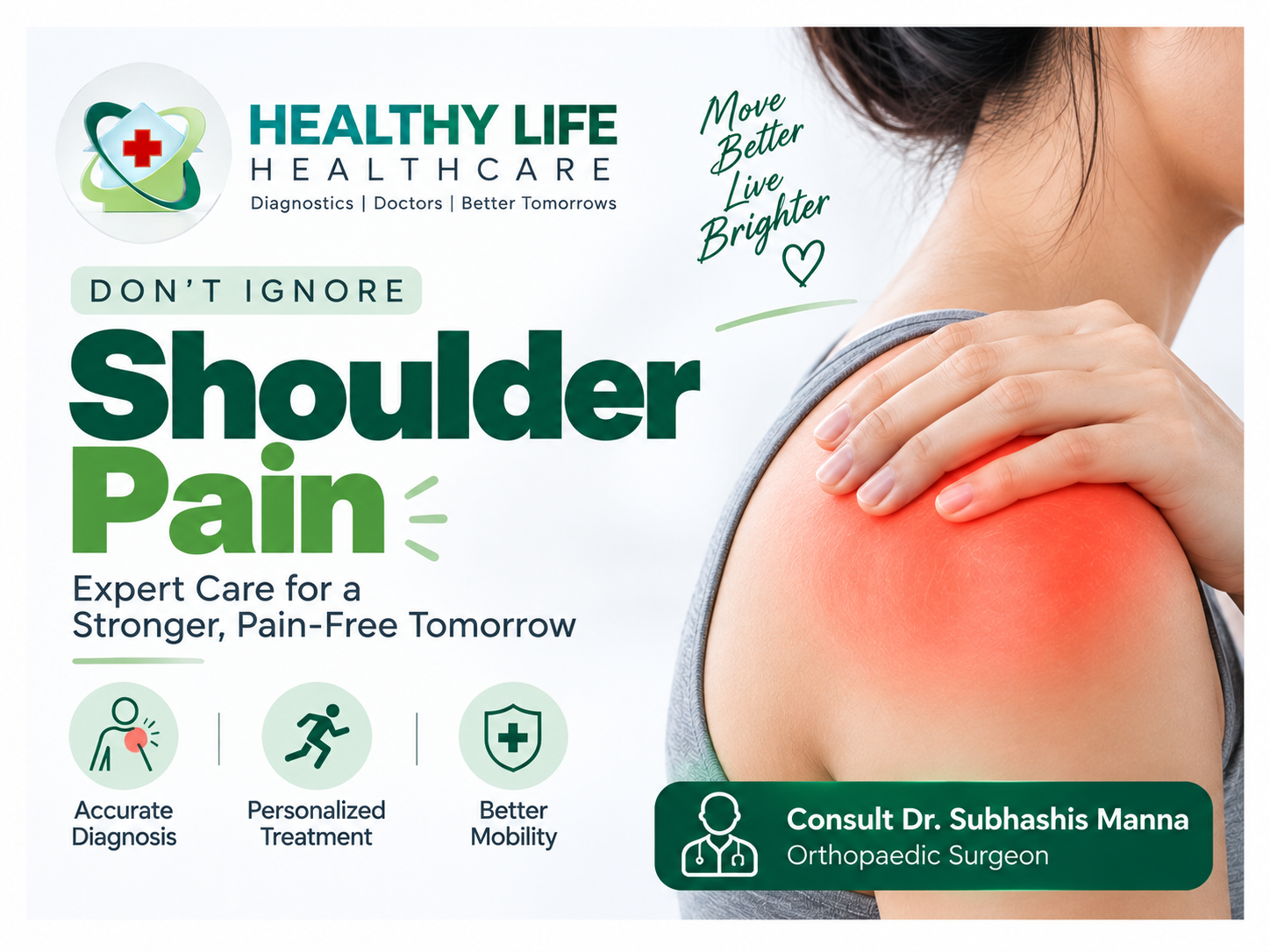
Shoulder pain is one of those health problems that people often ignore until it starts interfering with everyday life. A person may initially notice a little discomfort while reaching for something on a shelf, combing their hair, dressing, sleeping on one side, driving or lifting an object. Many people simply wait, hoping the pain will disappear.
As an orthopaedic surgeon, I believe persistent shoulder pain should not be treated as something that you simply have to "live with." Shoulder pain can have several causes, and identifying the underlying problem is important for choosing the right treatment.
For people across India, particularly adults who work with their hands, spend long hours at a desk, perform repetitive activities or remain physically active, shoulder pain awareness can help prevent a temporary problem from becoming a long-term limitation.
What Causes Shoulder Pain?
The shoulder is a complex joint that allows a very wide range of movement. This flexibility also means that several muscles, tendons, ligaments and other structures work together to keep the joint functioning properly.
Some common causes of shoulder pain include:
- Rotator cuff problems
- Frozen shoulder
- Shoulder arthritis
- Tendon inflammation or tendinopathy
- Shoulder bursitis
- Sports-related injuries
- Muscle strain
- Shoulder dislocation
- Fractures
- Repetitive-use injuries
- Injuries following a fall or accident
The rotator cuff consists of four tendons that help lift and rotate the arm. Rotator cuff problems are a common reason people seek medical attention for shoulder pain. Risk of rotator cuff tears generally increases with age, although younger people can also develop injuries, particularly after trauma or repetitive overhead activity.
This is why I would advise patients not to assume that every shoulder pain is simply "gas," "weakness," ageing or a minor muscle strain.
Frozen Shoulder: A Common Problem
Frozen shoulder, medically known as adhesive capsulitis, is another condition that can significantly affect daily activities.
Patients often describe increasing stiffness and difficulty moving the shoulder. Simple tasks such as putting on a shirt, reaching behind the back or lifting the arm can become uncomfortable or difficult.
Frozen shoulder can improve over time, but recovery may be slow. Treatment can include pain management, physical therapy and, in selected cases, injections or surgery. Physical therapy plays an important role in restoring movement.
From a patient's perspective, the most important thing is to understand that persistent stiffness deserves assessment rather than repeatedly forcing the shoulder through painful movements.
When Should You See an Orthopaedic Doctor?
Not every episode of shoulder pain requires immediate specialist treatment. Sometimes a mild strain may improve with appropriate rest and conservative care.
However, I recommend seeking medical evaluation when shoulder pain:
- Continues or repeatedly returns
- Makes sleeping difficult
- Limits arm movement
- Causes weakness
- Makes dressing or bathing difficult
- Develops after a fall or accident
- Is associated with significant swelling
- Prevents normal work or exercise
- Is accompanied by persistent numbness or other concerning symptoms
Sudden severe shoulder pain following trauma, an obvious deformity, or inability to move the arm should receive prompt medical attention.
The objective is not simply to eliminate pain temporarily. The objective is to understand why the shoulder hurts and how its function can be restored safely.
Shoulder Pain and Age
Shoulder problems can occur at any age, but the causes can differ.
In younger adults, sports injuries, falls, repetitive overhead activities and muscle or tendon problems may be important causes.
As people become older, degenerative changes in tendons and joints become increasingly relevant. The AAOS notes that rotator cuff tears are frequently associated with age-related degeneration, particularly from the 40s onward.
That does not mean that shoulder pain is a normal or unavoidable part of ageing.
Growing older should not mean accepting constant pain as part of everyday life.
Why You Should Not Self-Diagnose Shoulder Pain
One of the biggest challenges today is the amount of medical information available online.
A person may search for "shoulder pain exercise" and immediately start doing exercises from a video. Another person may take pain medication repeatedly without identifying the cause.
Exercises can be useful for many shoulder conditions, but the right exercise depends on the underlying problem.
For example, rehabilitation following a rotator cuff problem may involve specific strengthening and flexibility exercises. AAOS recommends that shoulder-conditioning exercises be selected appropriately and performed under professional guidance, particularly after an injury or surgery.
If an exercise causes pain, it should not simply be pushed through without understanding why.
How Is Shoulder Pain Diagnosed?
A proper orthopaedic assessment generally begins with your medical history and physical examination.
I would want to understand:
- When the pain started
- Whether there was an injury
- Where exactly the pain occurs
- Which movements make it worse
- Whether there is stiffness
- Whether you have weakness
- Whether pain occurs at night
- Your occupation and activity level
- Any previous shoulder problems
Depending on the suspected condition, imaging may be recommended.
For suspected rotator cuff tears, clinical examination is important, while imaging such as ultrasound or MRI can provide additional information when appropriate.
Importantly, an MRI should not automatically be the first answer to every shoulder pain complaint. The appropriate investigation depends on the clinical situation.
Treatment Does Not Always Mean Surgery
This is an important message I want patients to understand.
Shoulder pain does not automatically mean surgery.
Depending on the diagnosis, treatment may involve:
- Activity modification
- Appropriate medication
- Physiotherapy
- Stretching and strengthening
- Ice or heat when appropriate
- Injections in selected cases
- Treatment of an underlying condition
- Surgery for specific injuries or conditions
AAOS notes that many rotator cuff problems can initially be managed without surgery, depending on factors such as the patient's age, activity level, type and size of tear, symptoms and overall health.
If surgery is required, rehabilitation remains an important part of recovery.
Physiotherapy and Rehabilitation Matter
A successful shoulder recovery is not simply about reducing pain.
The shoulder needs appropriate movement, strength and function.
A structured rehabilitation programme may focus on restoring:
Mobility → flexibility → strength → stability → functional movement
The exact programme should be individualized according to the diagnosis.
Patients should also understand that recovery can take time. Shoulder conditions, particularly frozen shoulder and significant tendon injuries, may require patience and consistent rehabilitation.
Shoulder Pain in Kolkata: Awareness Matters
In a busy city such as Kolkata, people often continue working despite pain. Office workers may spend many hours at a computer, while drivers, manual workers, homemakers, athletes and older adults may place different demands on their shoulders.
This makes shoulder pain treatment in Kolkata an important area of orthopaedic awareness.
If your shoulder pain is affecting sleep, work, exercise or everyday activities, consider discussing it with an orthopaedic specialist rather than continuing to self-treat indefinitely.
For patients looking for healthcare services in Lake Town, Kolkata, HEALTHY LIFE HEALTHCARE is located at P-354, Lake Town Road, near Hanuman Mandir, Block A, Lake Town, Kolkata. HEALTHY LIFE HEALTHCARE
My Message to Patients
As an orthopaedic surgeon, my message is simple:
Do not ignore persistent shoulder pain.
Pain is information. It tells us that something may need attention, although pain alone cannot tell us exactly what the problem is.
Early evaluation can help identify whether the problem is related to a tendon, joint, stiffness, injury or another condition. Once the cause is understood, an appropriate treatment and rehabilitation plan can be developed.
You do not have to stop living an active life simply because your shoulder hurts.
The goal of orthopaedic care is not only pain relief. It is to help you regain movement, strength, confidence and independence in everyday activities.
Final Thoughts
Shoulder pain can affect anyone, from a young athlete to an office professional or an older adult. The causes are varied, and treatment should therefore be based on an appropriate clinical assessment rather than a one-size-fits-all solution.
If your shoulder pain in Kolkata is persistent, worsening or interfering with your daily activities, consider consulting an orthopaedic professional.
Awareness, timely diagnosis and appropriate rehabilitation can make a meaningful difference in managing many shoulder conditions.
Healthy shoulders mean greater freedom to work, move, sleep and enjoy everyday life.
Back to Blogs