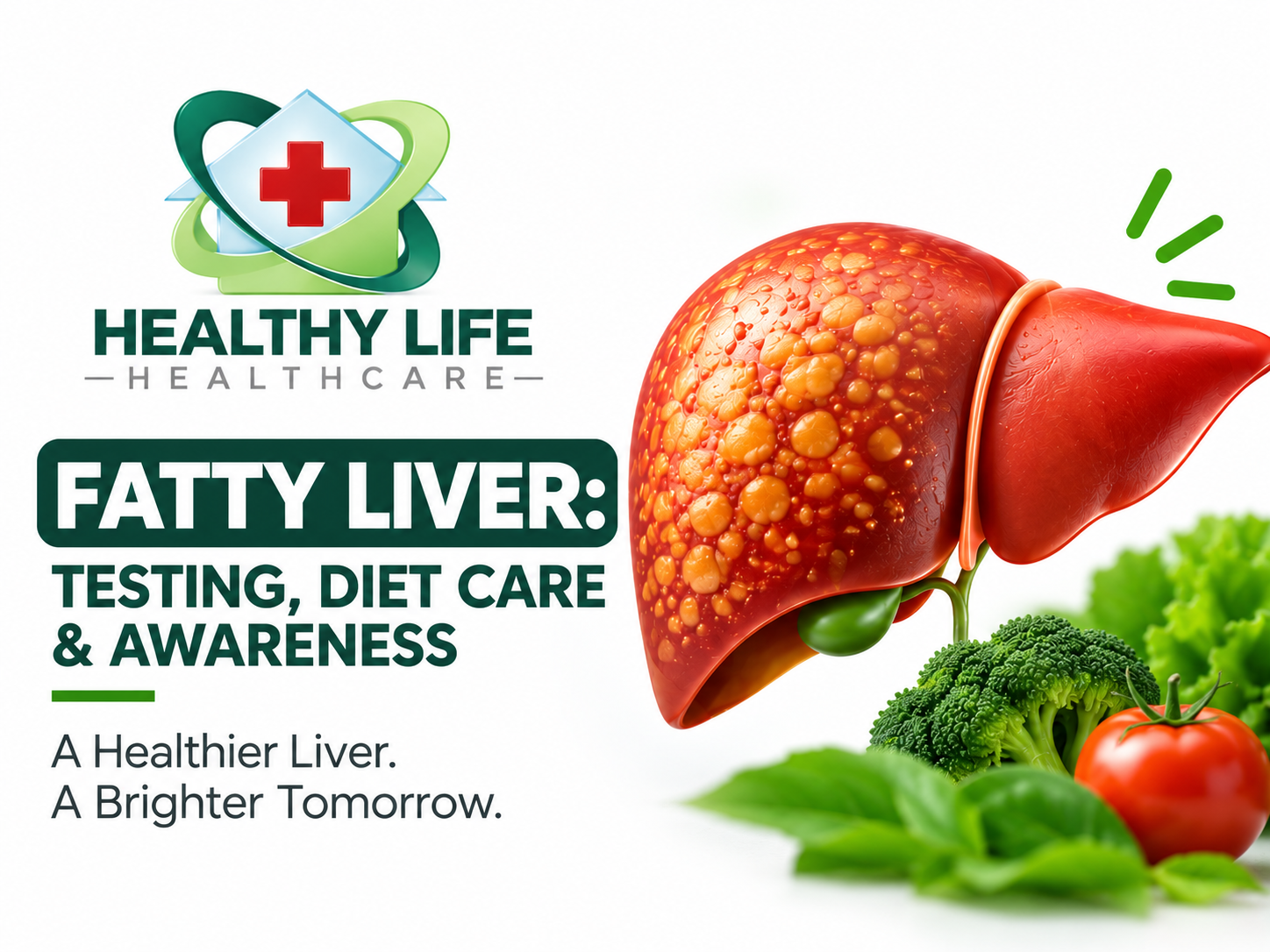
Fatty liver is becoming an increasingly important health concern in India. What makes it difficult to notice is that many people with fatty liver disease may have few or no symptoms in the early stages. A person may feel completely normal while fat is gradually accumulating in the liver. This is why awareness, appropriate testing and healthier daily habits matter.
For people living in Kolkata, Lake Town, Salt Lake, Dum Dum, Baguiati, New Town and nearby areas, regular health evaluation can be especially useful when there are risk factors such as excess weight, diabetes, high cholesterol, high triglycerides or an inactive lifestyle.
At HEALTHY LIFE HEALTHCARE in Lake Town, Kolkata, health awareness and timely diagnostic evaluation can help people understand their health status and discuss appropriate next steps with a doctor.
What Is Fatty Liver?
Fatty liver means that excess fat has accumulated in the liver. The condition can occur for different reasons. One commonly discussed form is metabolic dysfunction-associated steatotic liver disease (MASLD), previously referred to as non-alcoholic fatty liver disease or NAFLD.
Fatty liver is closely associated with metabolic conditions such as obesity, insulin resistance, type 2 diabetes, abnormal cholesterol or triglyceride levels and metabolic syndrome.
The liver performs many essential functions, including helping process nutrients, storing energy and supporting the body's metabolism. When liver health is affected, it should not simply be dismissed as a minor problem.
The encouraging part is that lifestyle changes can make an important difference, particularly when fatty liver is identified early.
Why Is Fatty Liver Often Called a Silent Problem?
Many people do not experience obvious symptoms during the early stages of fatty liver disease. Some may experience tiredness, mild discomfort in the upper-right abdomen or a general feeling of being unwell, but these symptoms are not specific to fatty liver.
This creates a common situation in India. A person may undergo a routine health check-up or an abdominal ultrasound for another reason and unexpectedly discover that they have fatty liver.
That is why fatty liver testing should be considered when a doctor identifies relevant risk factors.
Fatty Liver Testing: Which Tests May Be Used?
There is no single test that answers every question about fatty liver. Doctors may combine medical history, physical examination, blood tests and imaging.
1. Liver Function Tests
Blood tests may include liver enzymes such as ALT and AST. Other blood tests may also be recommended depending on the individual's health history.
However, normal liver enzymes do not necessarily mean that a person has no liver problem. Blood tests need to be interpreted by a healthcare professional.
2. Abdominal Ultrasound
An ultrasound of the abdomen can help identify fat accumulation in the liver. It is a commonly used, non-invasive imaging test.
However, routine imaging cannot by itself determine the complete extent of inflammation or fibrosis.
3. FibroScan and Elastography
When appropriate, a doctor may recommend elastography, including vibration-controlled transient elastography, commonly known as FibroScan, to assess liver stiffness and help evaluate the possibility of fibrosis.
4. Additional Blood Tests and Risk Assessment
Doctors may use routine blood results along with age and other information to calculate scores such as FIB-4, which can help assess the likelihood of advanced liver fibrosis. Additional testing may be recommended to investigate other possible causes of abnormal liver enzymes or liver disease.
The exact tests required are different for every individual. Testing should therefore be based on medical advice rather than a fixed package chosen without evaluation.
Can Fatty Liver Be Reversed?
For many people, lifestyle modification is an important part of managing fatty liver.
If someone is overweight or has obesity, gradual weight loss can reduce liver fat. NIDDK notes that losing around 3% to 5% of body weight can reduce liver fat, while greater weight loss may be needed to improve inflammation and fibrosis in some people. Rapid weight loss is not recommended.
This does not mean that everyone with fatty liver needs to follow the same weight-loss target. A doctor or qualified dietitian can help determine an appropriate approach.
Fatty Liver Diet Care: What Should Indians Eat?
Diet care does not have to mean giving up traditional Indian food.
The goal is to create a balanced eating pattern that is practical enough to follow every day.
Choose More:
- Vegetables and leafy greens
- Whole fruits rather than fruit juice
- Dal, lentils, beans and other pulses
- Whole grains and minimally processed cereals
- Fish and other suitable lean protein sources
- Nuts and seeds in appropriate portions
- Unsaturated fats in moderation
- Adequate dietary fibre
WHO recommends a varied diet based largely on minimally processed foods, vegetables, fruits, pulses and whole grains while limiting unhealthy fats, free sugars and highly processed foods.
For an Indian household, simple changes can include choosing dal with vegetables, adding more seasonal vegetables to meals, controlling rice or roti portions and replacing sugary beverages with water or other suitable unsweetened options.
Foods to Limit With Fatty Liver
There is no magic food that cleans the liver overnight. Be careful with online claims about “liver detox” drinks, powders and supplements.
It is generally sensible to limit:
- Sugary soft drinks
- Excess sweets and desserts
- Highly processed snacks
- Deep-fried foods
- Foods high in saturated or trans fats
- Excessively large portions
- Frequent consumption of refined, energy-dense foods
WHO recommends limiting free sugars, unhealthy fats and highly processed foods as part of a healthy dietary pattern.
If alcohol is contributing to liver disease, medical advice regarding alcohol avoidance is particularly important. The cause of liver fat should be established rather than assuming that every case has the same origin.
Exercise Is Part of Liver Care
Diet alone is not the complete answer.
Regular physical activity can support weight management and metabolic health. Physical activity can also provide benefits even when significant weight loss does not occur.
For many adults, practical activities such as brisk walking, cycling, swimming or other suitable exercise can become part of a healthier routine.
If you have diabetes, heart disease, significant obesity, joint problems or another medical condition, discuss an appropriate exercise plan with your healthcare professional.
Why Fatty Liver Awareness Matters in Kolkata
Kolkata has a rich food culture, busy working schedules and an increasingly urban lifestyle. Enjoying food is part of life, but regular excess calories, sugary drinks, frequent fried foods and physical inactivity can make maintaining metabolic health more difficult.
This does not mean people need to stop enjoying Bengali or Indian cuisine.
Instead, awareness should encourage portion control, balanced meals, regular movement and appropriate health checks.
Someone who discovers fatty liver on an ultrasound should not panic. At the same time, they should not simply ignore the finding. The next step should be understanding why it has occurred and whether there is evidence of liver inflammation or fibrosis.
When Should You Consider Fatty Liver Testing?
Talk to a doctor about fatty liver evaluation if you have risk factors such as:
- Overweight or obesity
- Type 2 diabetes
- High triglycerides or cholesterol
- Metabolic syndrome
- A sedentary lifestyle
- Abnormal liver enzymes
- A previous ultrasound showing fatty liver
- A family or personal history that increases liver-disease risk
Testing and follow-up should be personalised to the individual.
A Simple Message for Every Indian Family
Fatty liver is not simply about the liver. It can be connected with the broader picture of weight, blood sugar, cholesterol, diet and physical activity.
The most useful approach is not a crash diet or an internet “detox”. It is a sustainable lifestyle supported by appropriate medical evaluation.
If an ultrasound or blood test suggests fatty liver, speak with a qualified healthcare professional. Understanding the cause and assessing the health of the liver are more important than trying random home remedies.
Final Thoughts
Fatty liver can often remain unnoticed for years, which makes awareness and timely testing important. Blood tests, ultrasound and, when indicated, elastography or other assessments can help doctors evaluate liver health and the risk of fibrosis.
For people in Kolkata and Lake Town, maintaining a healthy weight, eating a balanced Indian diet, staying physically active and getting appropriate medical evaluation can form the foundation of better liver health.
At Healthy Life Healthcare, Lake Town, Kolkata, the focus should always be on informed healthcare, appropriate diagnostic evaluation and professional guidance rather than self-diagnosis.
Your liver may not always tell you when it needs attention. Sometimes, a health check-up can.
Back to Blogs