
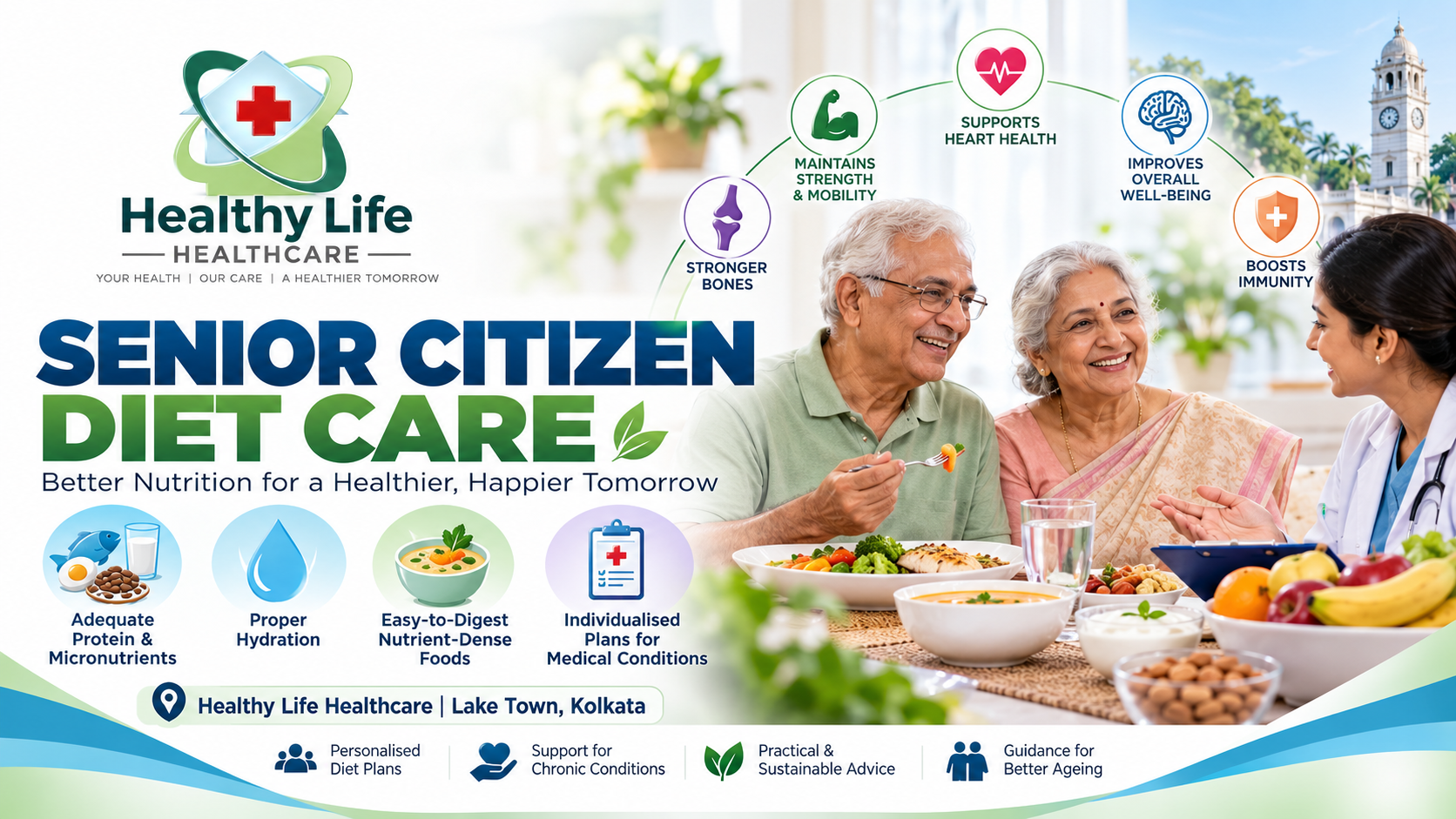
Ageing is a natural part of life, but the nutritional needs of the body change as we grow older. A meal that was sufficient at the age of 30 may not provide everything the body needs at 60, 70, or 80. Appetite may decrease, digestion may become slower, thirst may not be felt as strongly, and conditions such as diabetes, high blood pressure, kidney disease, heart disease, or high cholesterol may influence what a person should eat.
This is why senior citizen diet care is not simply about eating less. It is about eating better, appropriately, and according to individual needs.
For India's growing elderly population, good nutrition can play an important role in supporting strength, mobility, immunity, bone health, digestive health, and overall quality of life. A carefully planned diet can also help older adults manage nutrition alongside medical treatment when advised by their healthcare professionals.
For families in Kolkata, access to professional senior citizen diet care in Kolkata can make it easier to create practical and personalised nutrition plans for ageing family members.
What Is Senior Citizen Diet Care?
Senior citizen diet care is an individualised approach to nutrition for older adults. It considers a person's age, activity level, appetite, digestion, medical conditions, medications, food preferences, cultural habits, and nutritional requirements.
There is no single "senior citizen diet" that is suitable for everyone.
An active 65-year-old without major medical conditions may have very different nutritional requirements from an 80-year-old living with diabetes or kidney disease.
A professional dietitian or qualified healthcare professional can help develop a plan based on the individual's circumstances.
Why Nutrition Becomes Important With Age
As people age, several changes can affect nutrition.
Some older adults experience reduced appetite. Others may have difficulty chewing or swallowing. Dental problems can make certain foods uncomfortable to eat. Changes in taste and smell may also reduce interest in food.
At the same time, the body may require adequate amounts of important nutrients even when overall food intake decreases.
This creates an important challenge: older adults may eat less food while still needing sufficient nutrition.
A good diet therefore focuses on nutrient density rather than simply increasing the quantity of food.
1. Adequate Protein for Healthy Ageing
Protein is an important part of nutrition for older adults because it contributes to maintaining muscle tissue and other body functions.
Age-related loss of muscle mass can affect strength and mobility. Maintaining adequate protein intake, combined with appropriate physical activity when medically suitable, can support healthy ageing.
Protein sources may include:
- Eggs
- Fish
- Chicken
- Milk and curd
- Paneer
- Dal
- Lentils
- Beans
- Soy and other suitable plant proteins
- Nuts and seeds, where appropriate
However, protein requirements can vary considerably. Someone with certain kidney conditions, for example, may require a specifically planned protein intake.
This is why senior citizen nutrition should be personalised rather than based on a generic online diet chart.
2. Micronutrients Matter Too
Calories and protein are only part of the picture.
Older adults also need adequate vitamins and minerals through a balanced diet. Nutrients such as calcium, vitamin D, vitamin B12, folate, iron, potassium, and magnesium can be important depending on individual circumstances.
Food should therefore include a variety of vegetables, fruits, whole grains, dairy or suitable alternatives, pulses, nuts, seeds, and appropriate protein sources.
When a deficiency is suspected, a doctor may recommend laboratory testing and supplementation. Supplements should not automatically replace a balanced diet or be taken in high doses without professional advice.
3. Hydration in Older Adults
Hydration for senior citizens deserves special attention.
Older adults may sometimes experience a reduced sensation of thirst. As a result, they may not drink enough fluids throughout the day.
Adequate hydration supports normal body functions and can be particularly important during hot weather.
Water is generally the primary choice, while other suitable fluids can be included according to a person's health needs.
However, people with certain medical conditions, including some heart or kidney conditions, may have specific fluid restrictions. In such cases, fluid intake should follow medical advice.
For families in Kolkata, this is particularly relevant during hot and humid periods when maintaining appropriate hydration can become more challenging.
4. Easy-to-Digest, Nutrient-Dense Foods
A senior-friendly meal does not need to be complicated.
For someone experiencing digestive difficulties or chewing problems, soft and easy-to-eat foods can be useful.
Examples may include:
- Soft-cooked vegetables
- Khichdi
- Dal
- Vegetable soups
- Steamed fish
- Soft eggs
- Curd
- Oatmeal
- Soft rice preparations
- Well-cooked pulses
- Mashed or appropriately prepared vegetables
The objective is not simply to make food soft. The meal should still provide meaningful nutrition.
A bowl of khichdi, for example, can be planned with appropriate grains, pulses, vegetables, and other ingredients to create a balanced meal according to the person's nutritional needs.
Traditional Indian foods can therefore remain part of a healthy senior diet when portions, ingredients, preparation methods, and medical requirements are considered.
5. Diet Care for Medical Conditions
Many older adults live with one or more chronic health conditions.
This makes individualised diet care for senior citizens particularly important.
A person with diabetes may need a meal plan that manages carbohydrate portions and supports stable blood glucose levels.
Someone with hypertension may benefit from appropriate sodium management.
A person with high cholesterol may require changes in the type and amount of dietary fats.
People with kidney disease may require carefully controlled amounts of protein, sodium, potassium, phosphorus, or fluids depending on their stage of disease and medical advice.
Similarly, nutrition planning can be relevant for people managing heart disease, liver conditions, osteoporosis, digestive problems, or undernutrition.
There is therefore a major difference between a general healthy diet and a clinical diet plan for senior citizens.
Senior Citizen Diet Care and India's Population
India has a large and growing elderly population, making healthy ageing an increasingly important public health concern.
Indian families often have strong traditions around food and family meals. Grandparents may prefer familiar foods rather than unfamiliar "diet foods." This should be respected.
Good senior nutrition does not necessarily mean abandoning traditional Indian cuisine.
Instead, familiar foods can often be modified through appropriate portion sizes, cooking methods, ingredient selection, and meal timing.
For example, vegetables, dal, fish, curd, rice, roti, fruits, and other traditional foods can form part of a balanced diet when selected according to the individual's nutritional and medical requirements.
This human approach can make dietary changes easier for older adults to accept and maintain.
The Emotional Side of Senior Nutrition
Food is more than nutrition.
For many elderly people, meals are connected with family, memories, culture, and independence. Suddenly imposing a highly restrictive diet can sometimes make eating feel like another medical responsibility.
Senior citizen diet care should therefore consider the person's preferences and emotional relationship with food.
Family members can help by creating regular mealtimes, offering nutritious choices, making meals visually appealing, and allowing older adults to participate in food decisions whenever possible.
The goal is not perfection. The goal is sustainable nutrition.
Senior Citizen Diet Care in Kolkata
Families searching for a dietitian for senior citizens in Kolkata should consider professional guidance when an older family member has ongoing nutritional concerns, unintended weight changes, poor appetite, multiple medical conditions, or special dietary requirements.
Healthy Life Healthcare, Lake Town, Kolkata, can serve as a local healthcare destination for families seeking nutrition and healthcare support.
Residents of Lake Town, Dum Dum, Nagerbazar, Bangur, Salt Lake, Keshtopur, Baguiati, New Town, Rajarhat, and surrounding Kolkata areas can look for appropriate professional nutrition guidance based on their individual needs.
Conclusion
Senior citizen diet care is ultimately about helping older adults maintain nourishment, dignity, strength, and quality of life.
Adequate protein, essential micronutrients, appropriate hydration, easy-to-digest nutrient-dense foods, and individualised dietary planning can all have an important place in healthy ageing.
But every older adult is different. Age alone cannot determine a person's ideal diet.
A thoughtful nutrition plan should consider medical conditions, medications, appetite, activity, cultural food preferences, and individual nutritional requirements.
For families looking for senior citizen diet care in Kolkata, professional guidance can help turn general nutrition advice into a practical plan that fits the person's everyday life.
Healthy ageing is not about following a perfect diet. It is about giving the body the nourishment it needs while respecting the person behind the meal.
Back to Blogs