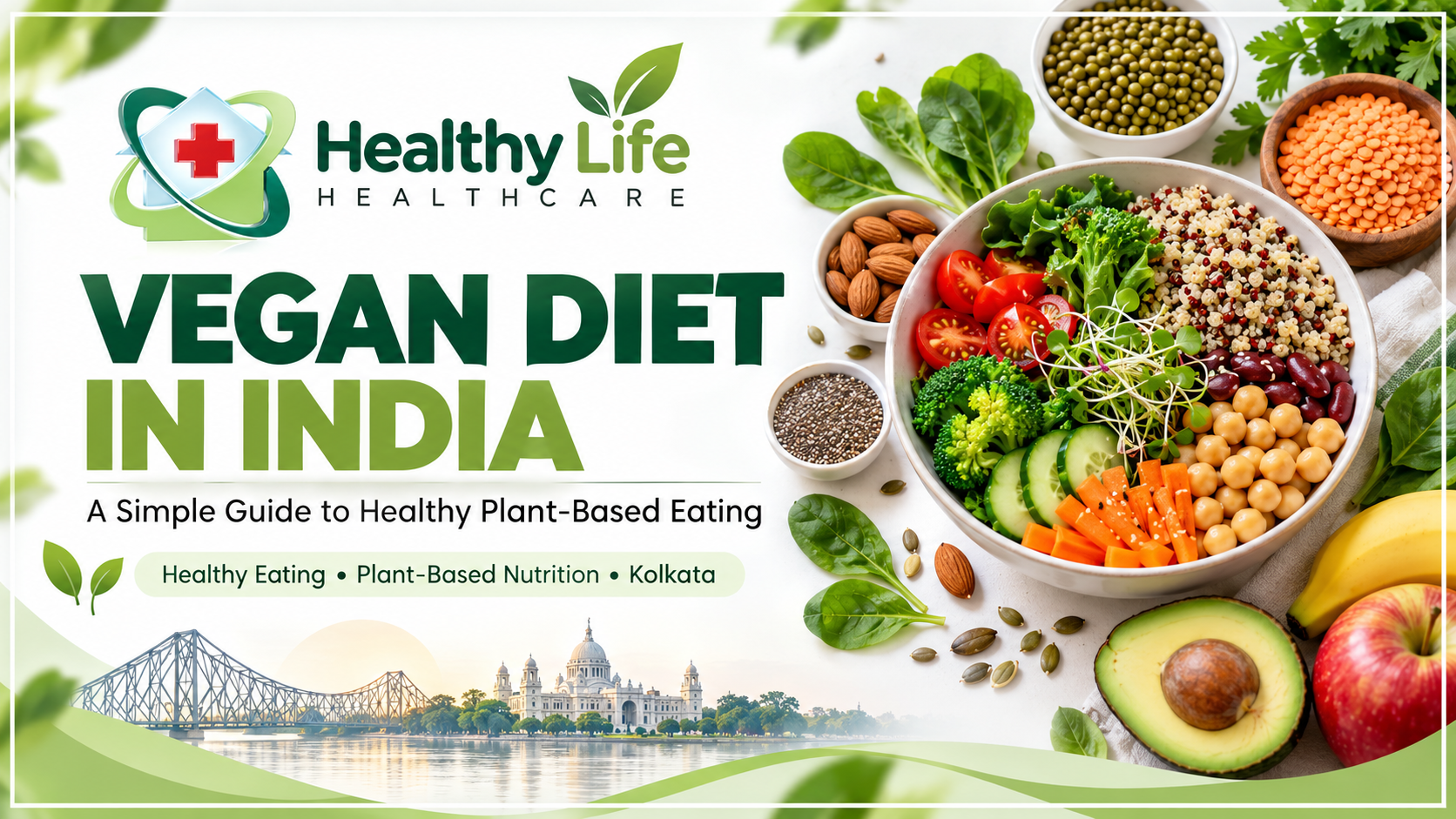
A healthy diet does not always have to be complicated. For many people in India, food is deeply connected with family, culture, tradition and everyday life. From dal and rice to roti, vegetables, fruits, nuts and seeds, Indian kitchens already contain many foods that can form the foundation of a balanced plant-based diet.
A vegan diet means avoiding animal-derived foods such as meat, fish, eggs, milk and other dairy products, while focusing on plant-based foods. When planned properly, a vegan diet can include a wide variety of nutritious Indian foods.
For people living in Kolkata, where traditional Bengali food offers an abundance of vegetables, lentils, rice, fruits and spices, adopting a healthy plant-based eating pattern can be practical and enjoyable.
What Is a Vegan Diet?
A vegan diet is a completely plant-based eating pattern. It generally includes:
- Vegetables
- Fruits
- Whole grains
- Rice and millets
- Dal and pulses
- Chickpeas and kidney beans
- Soybeans and tofu
- Nuts and seeds
- Plant-based oils
- Herbs and spices
Unlike a vegetarian diet, a vegan diet excludes dairy products such as milk, curd, paneer, butter and ghee, along with eggs, meat and fish.
However, simply removing animal foods does not automatically make a diet healthy. A balanced vegan diet should provide sufficient protein, calories, healthy fats, vitamins and minerals.
Is a Vegan Diet Suitable for Indian People?
Yes, a well-planned vegan diet can fit naturally into Indian food habits.
The ICMR-National Institute of Nutrition (ICMR-NIN) explains that vegans can obtain adequate protein from a varied diet containing vegetables, beans, grains, nuts and seeds. It also highlights the importance of combining cereals and pulses to improve the quality of protein in the diet. ICMR National Institute of Nutrition
This is particularly relevant to Indian diets because foods such as rice and dal, roti and chana, or khichdi already combine cereals and pulses.
For example, a simple meal of:
Rice + Dal + Mixed Vegetables + Salad
can be transformed into a nutritious plant-based meal by paying attention to portion sizes and overall dietary variety.
Indian Vegan Foods That Can Provide Protein
One of the most common questions people ask is, "How will I get enough protein on a vegan diet?"
The answer is that India has many affordable plant-based protein sources.
Good choices include:
- Moong dal
- Masoor dal
- Chana
- Rajma
- Black gram
- Soybeans
- Tofu
- Green peas
- Chickpeas
- Peanuts
- Almonds
- Pumpkin seeds
- Sesame seeds
- Flax seeds
- Chia seeds
ICMR-NIN identifies pulses such as lentils, chickpeas, kidney beans, black gram, soybean and green peas as useful protein sources. Nuts and seeds can also contribute protein and other nutrients. ICMR National Institute of Nutrition
Therefore, a high-protein vegan diet in India does not necessarily require expensive imported foods.
What Does a Healthy Vegan Plate Look Like?
A practical vegan plate can contain different food groups.
1. Protein
Include dal, beans, chickpeas, soybean, tofu or other suitable plant proteins.
2. Whole Grains
Choose foods such as brown rice, oats, whole wheat roti or millets according to your nutritional needs.
3. Vegetables
Try to include several types of vegetables throughout the day.
4. Fruits
Seasonal fruits can provide important vitamins, minerals and dietary fibre.
5. Healthy Fats
Nuts, seeds and appropriate quantities of plant oils can contribute healthy fats.
The goal is not to eat a "perfect" meal every time. The goal is to create a balanced eating pattern over the entire day.
Vegan Diet for Weight Management
Many people search online for a vegan diet for weight loss. However, vegan does not automatically mean low-calorie.
French fries, sugary beverages, vegan desserts and highly processed vegan snacks can still contribute substantial calories.
A healthier approach is to focus on:
Whole grains + vegetables + pulses + fruits + nuts and seeds + adequate protein
Portion control and physical activity also matter.
If you are trying to lose weight, your diet should ideally be personalised according to your age, body composition, lifestyle, activity level and existing health requirements.
Important Nutrients in a Vegan Diet
People following a completely vegan diet should pay particular attention to certain nutrients.
These can include:
- Vitamin B12
- Vitamin D
- Calcium
- Iron
- Zinc
- Iodine
- Omega-3 fatty acids
- Protein
Vitamin B12 deserves particular attention because natural food sources are limited in a completely plant-based diet. Depending on individual circumstances, fortified foods or supplementation may be required under appropriate professional guidance.
This is one reason why a personalised vegan diet plan can be more useful than simply copying a diet chart from social media.
Vegan Diet and Kolkata Lifestyle
Kolkata has a rich food culture, and changing eating habits does not mean giving up the pleasure of Indian food.
Traditional ingredients can be used creatively to prepare plant-based meals.
For example:
Breakfast: Vegetable poha with peanuts and fruit
Lunch: Rice, dal, mixed vegetables and salad
Evening: Fruit with nuts or roasted chana
Dinner: Roti, tofu or chickpea curry and vegetables
The exact quantities should depend on the individual's nutritional requirements.
For people searching for a dietitian in Kolkata, vegan diet plan in Kolkata, healthy diet plan in Lake Town, or personalised diet plan near me, professional nutritional guidance can help create a practical plan around local foods and individual needs.
Vegan Diet Should Be Personal, Not Trend-Based
Every person's nutritional requirements are different.
A diet suitable for a young active adult may not be appropriate for an older person. Similarly, people with specific medical conditions, pregnancy, breastfeeding, nutritional deficiencies or other dietary requirements may need specialised advice.
That is why healthy eating should not be treated as a social-media trend.
A good diet should fit your:
- Lifestyle
- Food preferences
- Budget
- Activity level
- Nutritional requirements
- Health goals
Conclusion
A vegan diet can be a meaningful way to include more plant foods in everyday Indian eating. The key is balance.
You do not need expensive superfoods to start. Indian staples such as dal, chana, rajma, soybean, vegetables, fruits, whole grains, nuts and seeds can form an important part of a nutritious plant-based diet.
For people in Kolkata, a carefully planned vegan diet can be adapted to familiar Bengali and Indian foods rather than requiring a completely different lifestyle.
If you are considering a vegan diet for weight loss, healthy eating, fitness or general wellness, speak with a qualified nutrition professional before making major dietary changes. A personalised approach can help you meet your nutritional requirements while keeping your meals practical and enjoyable.
For nutrition and healthcare guidance in Lake Town, Kolkata, HEALTHY LIFE HEALTHCARE can be considered as a local healthcare destination for discussing personalised dietary and wellness requirements.
Back to Blogs