
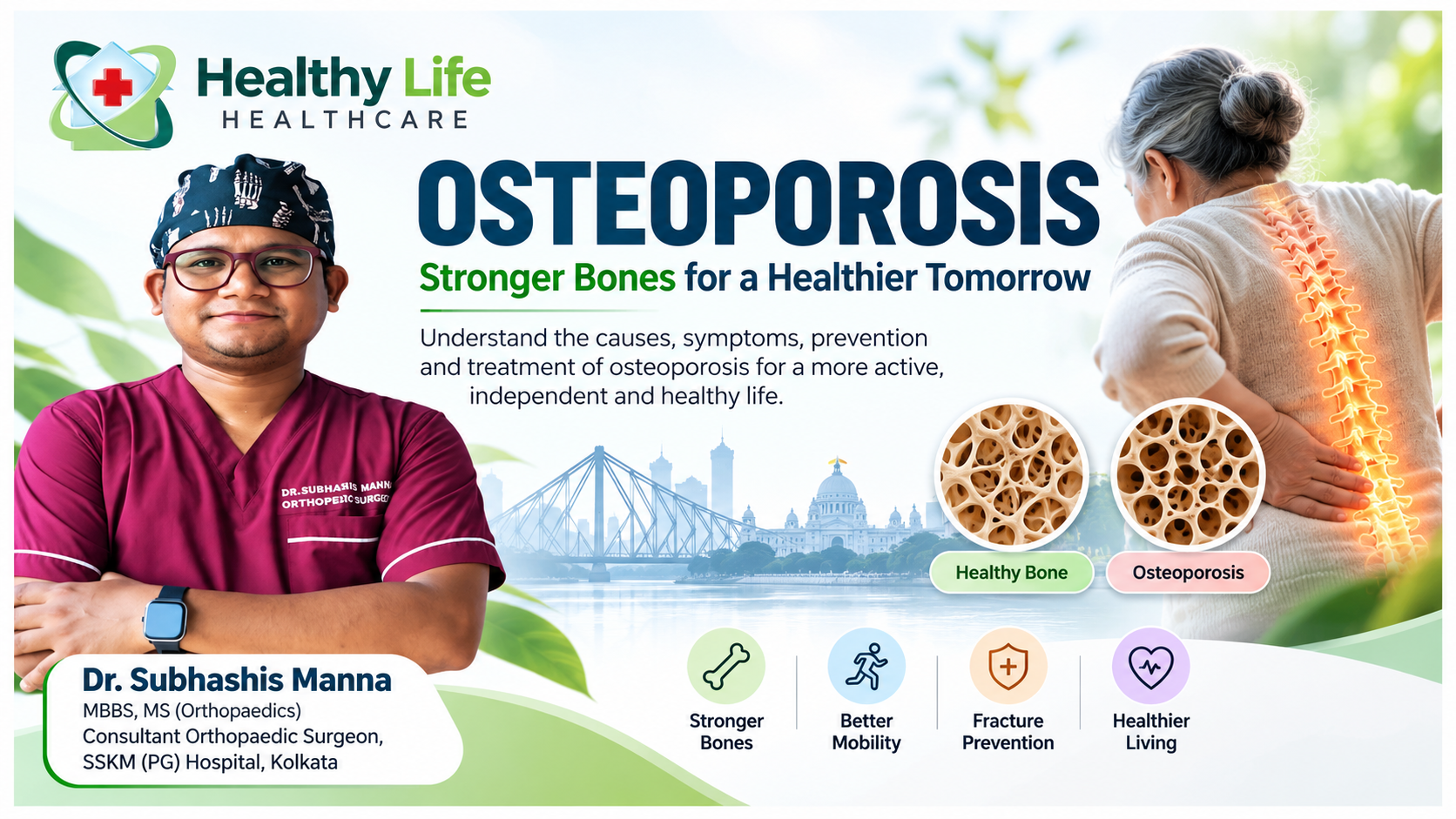
Osteoporosis is often called a “silent disease” because bone loss can happen gradually without obvious symptoms. Many people discover they have osteoporosis only after suffering a fracture from a minor fall or everyday activity. In India, where the population is ageing and vitamin D deficiency, limited physical activity, and nutritional problems are common, awareness about bone health is increasingly important.
For people living in Kolkata and West Bengal, regular attention to bone health can help reduce the risk of fractures and maintain mobility and independence as we grow older.
What Is Osteoporosis?
Osteoporosis is a condition in which bones become weaker and more fragile. Healthy bones are strong but continuously undergo a natural process of breaking down and rebuilding. With osteoporosis, bone loss becomes greater than bone formation, resulting in reduced bone density and deterioration of bone structure.
Weak bones may fracture more easily, particularly in the hip, spine and wrist.
A person may not experience pain or other symptoms during the early stages. This is why osteoporosis is sometimes detected only after a fracture.
Osteoporosis in India: Why Awareness Matters
India has a large and growing ageing population. As life expectancy increases, maintaining healthy bones becomes an important part of healthy ageing.
Several factors may contribute to poor bone health among Indians, including inadequate calcium intake, vitamin D deficiency, reduced sunlight exposure, sedentary lifestyles and insufficient weight-bearing exercise. Women may also experience accelerated bone loss after menopause because of hormonal changes.
This does not mean that osteoporosis affects only older women. Men can also develop osteoporosis, particularly with increasing age or certain medical conditions and medications.
For this reason, osteoporosis prevention should be considered a lifelong process rather than something that begins after a fracture.
Common Risk Factors for Osteoporosis
Some people have a higher risk of developing osteoporosis than others.
Important risk factors include:
- Increasing age
- Post-menopausal status
- Family history of osteoporosis or fractures
- Low body weight
- Poor calcium and vitamin D intake
- Lack of physical activity
- Smoking
- Excessive alcohol consumption
- Certain long-term medications, including corticosteroids
- Some thyroid, kidney and hormonal disorders
- Previous fractures
- Poor balance and increased risk of falling
Understanding your individual risk factors can help determine whether you should undergo further evaluation.
Symptoms You Should Not Ignore
Early osteoporosis usually does not cause noticeable symptoms. However, certain changes may indicate significant bone loss.
These can include:
- Fractures after a minor fall
- Persistent back pain
- Loss of height over time
- A stooped or curved posture
- Repeated fractures
- Difficulty performing normal physical activities
A sudden fracture after a relatively minor injury should not simply be considered a normal consequence of ageing. It may be an opportunity to investigate underlying bone weakness.
Osteoporosis and Fracture Risk
One of the major concerns associated with osteoporosis is fracture.
A fracture of the hip can significantly affect mobility and independence, particularly among older adults. Spinal fractures can cause persistent back pain, loss of height and changes in posture.
Wrist fractures can also occur following a fall, especially when a person tries to protect themselves with their hands.
Preventing fractures therefore involves more than simply strengthening bones. Fall prevention, balance, muscle strength and a safe home environment are also important.
How Is Osteoporosis Diagnosed?
If osteoporosis is suspected, an orthopedic surgeon or appropriate healthcare professional may evaluate your medical history, risk factors, physical condition and previous fractures.
A commonly used investigation is a Bone Mineral Density (BMD) test, usually performed using a DEXA or DXA scan.
Depending on the individual's circumstances, the doctor may also recommend blood tests or other investigations to identify nutritional deficiencies or medical conditions that could affect bone health.
It is important not to self-diagnose osteoporosis based only on symptoms. A proper medical assessment helps determine the most appropriate approach.
Osteoporosis Treatment and Management
Treatment depends on the severity of bone loss, age, fracture history, overall health and individual risk factors.
A comprehensive osteoporosis treatment plan may include nutritional improvement, appropriate physical activity, fall prevention and, when medically indicated, prescription medicines.
Calcium and vitamin D are important nutrients for maintaining healthy bones. However, supplements should not automatically be taken in high doses. The appropriate amount depends on individual nutritional status and medical requirements.
Weight-bearing exercise and resistance exercises can help maintain bone and muscle strength. Activities should be selected according to a person's age, fitness level and existing medical conditions.
For people who have been diagnosed with osteoporosis, an orthopedic specialist can help determine whether medication is appropriate and which treatment approach is suitable.
Preventing Osteoporosis Through Everyday Habits
Bone health begins long before osteoporosis is diagnosed.
A balanced diet containing adequate protein, calcium and other essential nutrients can support healthy bones. Regular physical activity can help maintain muscle strength, coordination and balance.
For older adults, reducing the risk of falls is particularly important. Simple measures such as keeping floors clear, improving lighting, using appropriate footwear and addressing vision problems can help make the home safer.
Avoiding smoking and limiting excessive alcohol consumption can also support overall bone health.
When Should You Consult an Orthopedic Surgeon?
You should consider discussing your bone health with an orthopedic specialist if you:
- Have experienced a fracture after a minor fall
- Have a family history of osteoporosis
- Are experiencing unexplained persistent back pain
- Have noticed loss of height or a stooped posture
- Have risk factors for osteoporosis
- Have taken corticosteroids for a long period
- Are concerned about bone health after menopause or with increasing age
Early evaluation can help identify bone loss before a serious fracture occurs.
Osteoporosis Care in Kolkata
People searching for osteoporosis treatment in Kolkata, orthopedic doctor in Kolkata, osteoporosis specialist in Kolkata, bone specialist in Kolkata, or orthopedic surgeon in Kolkata should consider a professional medical evaluation rather than relying on internet advice alone.
Healthy Life Healthcare, Kolkata, provides healthcare services where patients can seek appropriate medical guidance and evaluation for bone and orthopedic concerns.
Dr. Subhashis Manna, MBBS, MS (Orthopaedics), Consultant Orthopaedic Surgeon at SSKM (PG) Hospital, Kolkata, provides orthopedic consultation for patients dealing with various bone, joint and musculoskeletal conditions.
Final Thoughts
Osteoporosis should not be viewed simply as an unavoidable part of ageing. Bone health can be influenced by nutrition, physical activity, medical care and lifestyle choices.
The most important message is simple: do not wait for a fracture to start thinking about your bones.
If you are at increased risk of osteoporosis, speak with an orthopedic specialist and ask whether bone health assessment is appropriate for you. Early identification and appropriate management can help reduce fracture risk and support a more active and independent life.
Dr. Subhashis Manna
MBBS, MS (Orthopaedics)
Consultant Orthopaedic Surgeon, SSKM (PG) Hospital, Kolkata
