
Introduction: When Pain Travels from the Back to the Leg
Imagine waking up in the morning and feeling a sharp pain that travels from your lower back through your buttock and down one leg. Sitting becomes uncomfortable, walking feels difficult, and even getting out of bed requires extra effort. For many people, this is what living with sciatica can feel like.
Sciatica is more than ordinary back pain. It can affect sleep, work, household responsibilities, and the simple pleasure of taking a walk with family. For working professionals, drivers, office employees, homemakers, and older adults across India, persistent nerve pain can become a daily struggle.
The good news is that many people with sciatica improve with appropriate treatment and time. Understanding the condition, recognizing warning signs, and seeking timely medical advice are important steps toward recovery.
What Is Sciatica?
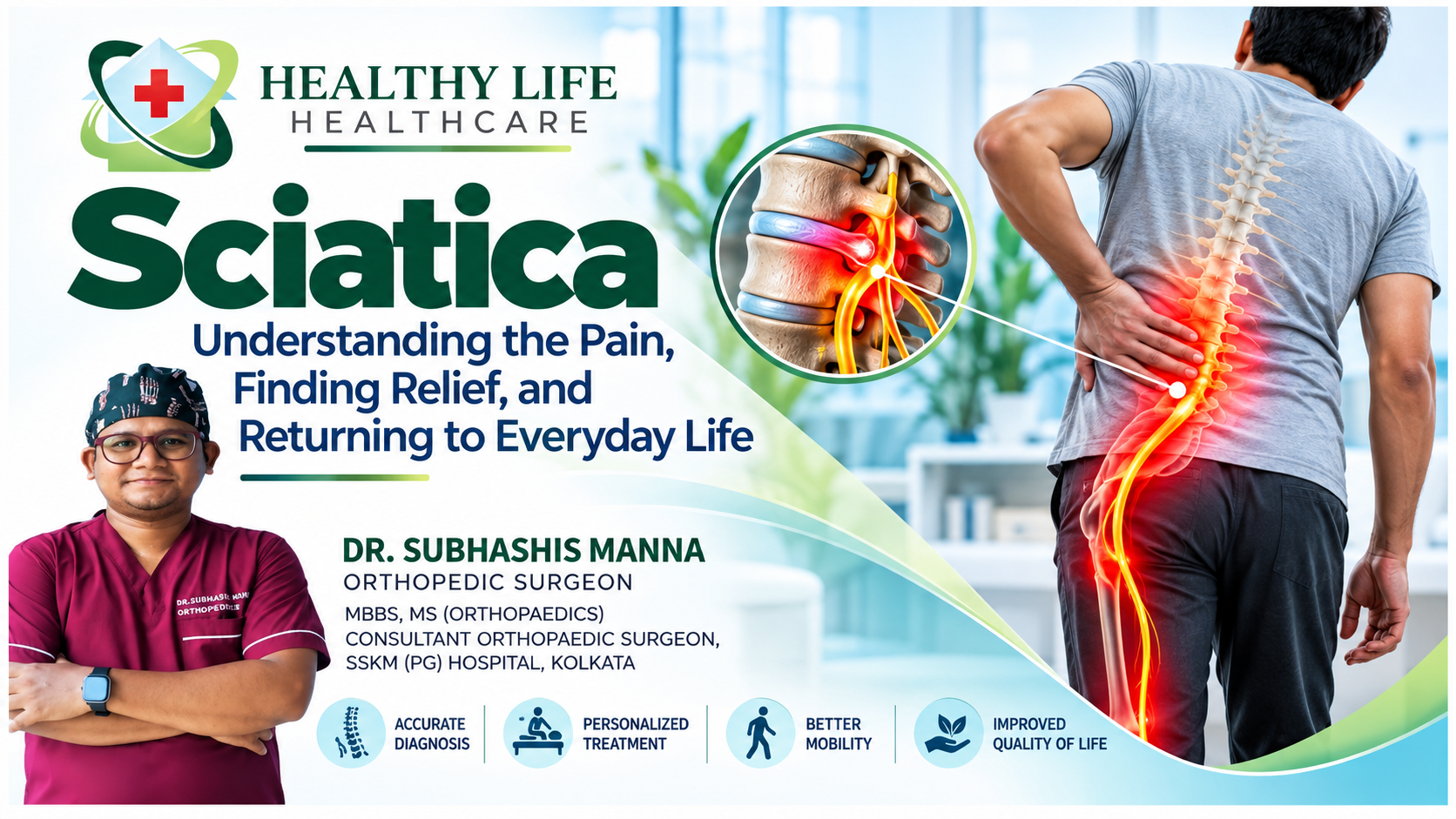
Sciatica refers to pain that travels along the pathway of the sciatic nerve, which extends from the lower back through the buttocks and down the legs. It commonly occurs when a nerve root in the lower spine becomes irritated or compressed.
A slipped or herniated disc is one of the common causes. Other causes include narrowing of the spinal canal, age-related changes in the spine, and certain spinal injuries.
Sciatica usually affects one side of the body. The pain may feel like a burning sensation, an electric shock, or a sharp pulling sensation. Some people also experience tingling, numbness, or weakness in the affected leg.
It is important to understand that not every case of lower back pain is sciatica. A proper clinical assessment helps identify the likely cause of the symptoms.
Common Symptoms of Sciatica
Sciatica symptoms can vary from person to person. Some people experience mild discomfort, while others find it difficult to perform routine activities.
Common symptoms include:
-
Pain spreading from the lower back to the buttock and leg.
-
Burning, shooting, or electric shock-like pain.
-
Tingling or pins-and-needles sensations in the leg or foot.
-
Numbness in certain areas of the leg.
-
Difficulty sitting, standing, or walking comfortably.
-
Pain that becomes worse during prolonged sitting, coughing, or sneezing.
-
Muscle weakness in the affected leg or foot.
These symptoms should not be ignored when they persist, become severe, or interfere with daily life.
What Causes Sciatica in Indian Adults?
Sciatica can affect people from different age groups and occupations. In India, everyday activities and working conditions may contribute to back problems in some individuals.
1. Prolonged sitting: Office workers, IT professionals, students, and people who drive for long periods may experience back discomfort associated with prolonged sitting and limited movement.
2. Incorrect lifting techniques: Lifting heavy household items, construction materials, or workplace equipment while bending and twisting the back can increase the risk of injury.
3. Herniated or slipped disc: When disc material presses on a nearby nerve root, it may produce pain that travels down the leg.
4. Age-related spinal changes: As people grow older, changes in spinal discs and joints may contribute to nerve compression.
5. Limited physical activity: Inactivity and reduced muscle conditioning may contribute to back problems, although sciatica can also occur in physically active people.
6. Excess body weight: Additional mechanical stress on the spine may contribute to back symptoms in some individuals.
Identifying the underlying cause is essential because treatment should be based on the patient's symptoms, examination findings, and overall health.
How Is Sciatica Diagnosed?
A proper diagnosis begins with listening to the patient.
An orthopedic specialist may ask when the pain started, where it travels, whether there is numbness or weakness, and which activities make it better or worse.
The examination may include checking muscle strength, sensation, reflexes, walking ability, and certain movements of the lower back and legs.
An MRI scan may be recommended when symptoms are persistent or severe, when significant nerve problems are suspected, or when the results could influence treatment decisions. X-rays may help assess certain bone-related changes, but they do not show herniated discs as clearly as MRI.
Not everyone with sciatica needs immediate imaging. The appropriate tests depend on the clinical situation.
Treatment Options: A Personalized Approach
There is no single treatment that works for every patient. The aim is to relieve pain, support recovery, improve mobility, and address the underlying cause.
1. Medication and Pain Management
A doctor may recommend suitable medication depending on the patient's symptoms, medical history, age, and other health conditions. Some medicines can have side effects or may not be appropriate for people with kidney disease, stomach ulcers, or certain other conditions.
Patients should avoid self-medicating or taking repeated painkillers without medical advice.
2. Physiotherapy and Guided Exercises
Physiotherapy can help selected patients improve movement, strength, flexibility, and confidence during recovery. Exercises should be chosen according to the individual's condition and tolerance.
Avoid forcing stretches or continuing exercises that significantly worsen pain, numbness, or weakness.
3. Everyday Movement and Posture
Extended bed rest is generally not recommended for uncomplicated sciatica. Gentle movement and a gradual return to normal activities, as tolerated, can support recovery.
Patients may benefit from taking regular movement breaks, adjusting their workstation, using appropriate back support, and learning safer lifting techniques.
4. Further Treatment When Necessary
If pain remains severe despite appropriate nonsurgical treatment, a specialist may consider additional options, including selected spinal injections or surgery.
Surgery is not necessary for most patients. However, it may be recommended when there is significant or progressive neurological weakness, certain serious nerve-compression conditions, or persistent disabling symptoms despite suitable treatment.
The decision should be individualized after a careful assessment.
When Should You Seek Urgent Medical Attention?
Some symptoms may indicate serious nerve compression and require immediate hospital assessment.
Seek emergency medical care if you experience:
-
New difficulty passing urine or loss of bladder control.
-
Loss of bowel control.
-
Numbness around the groin, genitals, or buttocks.
-
Severe or rapidly worsening weakness in the legs.
-
Significant symptoms affecting both legs, particularly with numbness or weakness.
Do not wait for a routine appointment if these warning signs occur.
Preventing Recurring Back and Leg Pain
Although sciatica cannot always be prevented, certain habits may help support spinal health.
-
Stay physically active within your abilities.
-
Take regular breaks from prolonged sitting.
-
Use safe lifting techniques and avoid twisting while carrying heavy loads.
-
Maintain a comfortable sitting and working posture.
-
Follow an appropriate exercise programme recommended by a healthcare professional.
-
Work toward a healthy weight if advised.
-
Seek medical assessment if back pain repeatedly travels down the leg or begins affecting normal activities.
Small, consistent changes can make everyday movement more manageable.
Sciatica Treatment in Kolkata: The Importance of Orthopedic Care
For people living in Lake Town, Dum Dum, Bangur, Salt Lake, and other parts of Kolkata, persistent back and leg pain can make travelling to work and managing family responsibilities difficult.
Consulting an orthopedic specialist can help patients understand the possible cause of their symptoms and decide whether medication, physiotherapy, imaging, or further treatment is appropriate.
At Healthy Life Healthcare, Lake Town, Kolkata, patients can seek consultation with Dr. Subhashis Manna, Orthopedic Surgeon, MBBS, MS (Orthopaedics), Consultant Orthopaedic Surgeon at SSKM (PG) Hospital, Kolkata.
The focus of an orthopedic consultation should be on understanding each patient's concerns, assessing symptoms carefully, and recommending an appropriate treatment pathway.
People searching for sciatica treatment in Kolkata, orthopedic doctor near Lake Town, or leg nerve pain treatment in Kolkata should prioritize a proper medical assessment rather than relying solely on online remedies or advice from others.
Conclusion: Helping People Move Forward Without Fear
Sciatica can make ordinary activities feel difficult. Walking to the market, sitting through a meeting, climbing stairs, or sleeping comfortably may become daily challenges.
But pain does not have to be faced with confusion or fear. Understanding the condition, seeking timely medical advice, and following an appropriate treatment plan can help many patients work toward recovery.
For people experiencing persistent lower back pain that travels down the leg, professional orthopedic guidance can be an important first step.
Healthy Life Healthcare, Lake Town, Kolkata, encourages patients to take persistent back and leg pain seriously and seek appropriate medical guidance. With the right assessment and individualized care, the journey toward comfortable movement can begin.
Medical disclaimer: This article is intended for general educational purposes and does not replace a consultation, diagnosis, or treatment plan from a qualified healthcare professional.
